
Best Close Combat Martial Arts: Techniques, Training, and Self-Defense Guide
Choosing a martial art can feel confusing when so many styles promise better fitness, stronger self-defense skills, and greater confidence. Some focus on striking, others emphasize grappling, and many combine different methods to help students respond to challenging situations.
Close combat martial arts focus on understanding and managing situations where people are within close physical distance. Training may involve footwork, balance, defensive movement, controlled striking, grappling, and learning how to create space when necessary. The right approach depends on your goals, physical abilities, experience, and the quality of instruction available.
Whether you are exploring combat martial arts for personal safety, looking for hand-to-hand combat martial arts training, or searching for a combat club martial arts and fitness program, understanding the differences between training styles can help you make a more informed decision.
At Tiger Kung Fu, martial arts training can also be an opportunity to develop discipline, body awareness, and confidence. The most useful training is not simply about physical strength. It also teaches students to recognize risks, make thoughtful decisions, and understand when avoiding confrontation is the safest option.
What Are Close Combat Martial Arts?
Close combat martial arts are training systems that prepare practitioners to manage physical encounters at short distances. Depending on the style, classes may include defensive movement, striking fundamentals, clinch awareness, grappling, balance, and techniques for escaping unsafe positions.
Some systems concentrate on standing techniques, while others include ground-based training. Traditional Kung Fu, Karate, Judo, Brazilian Jiu-Jitsu, Boxing, and Muay Thai offer different approaches to movement, distance, defense, and physical conditioning.
The term close combat does not describe one single martial art. It is a broad description of training that deals with close-range situations.
A responsible program should also teach situational awareness, boundaries, de-escalation, and safe ways to disengage. Real-world encounters can be unpredictable, so no martial art guarantees that a person will win a confrontation or avoid injury.
Best Close Combat Martial Arts for Real-World Self-Defense
The best style depends on what you want to learn and how effectively a school teaches its students to apply those skills under controlled conditions.
Kung Fu
Kung Fu includes a wide range of Chinese martial arts traditions. Depending on the school and style, training may emphasize coordinated movement, defensive positioning, hand techniques, footwork, forms, balance, and awareness.
Students can develop body control and learn to move with greater precision. Some schools include partner drills and practical self-defense applications, while others focus more heavily on forms and traditional practice.
If you are interested in Kung Fu, ask the instructor how the curriculum addresses personal safety, controlled partner training, and conflict avoidance.
Boxing
Boxing focuses on punches, footwork, defensive movement, timing, and distance management. Training can improve coordination, cardiovascular fitness, and the ability to maintain balance while moving.
Although boxing develops useful athletic skills, it does not automatically prepare students for every self-defense situation. It generally does not cover the full range of grappling, ground control, or weapon-related risks.
Muay Thai
Muay Thai is a striking art that commonly includes punches, kicks, knees, elbows, and clinch work in regulated training environments.
Students develop conditioning, coordination, and an understanding of striking distance. Beginners should learn through supervised drills and controlled practice rather than attempting powerful techniques without proper instruction.
Judo and Brazilian Jiu-Jitsu
Judo emphasizes throws, balance disruption, and grappling, while Brazilian Jiu-Jitsu focuses heavily on positional control, escapes, and ground grappling.
These arts can help practitioners understand how balance and body positioning affect physical encounters. Training should emphasize controlled practice, tapping when necessary, and respecting a partner’s safety.
Karate
Karate includes various traditions that teach striking, stances, defensive movement, and coordinated techniques. Some schools emphasize forms and point-based competition, while others include more partner drills and practical applications.
When comparing styles, look beyond the name. Instructor experience, training methods, safety standards, and opportunities to practice against realistic but controlled resistance can matter as much as the martial art itself.
Hand-to-Hand Combat Martial Arts: Essential Techniques for Beginners
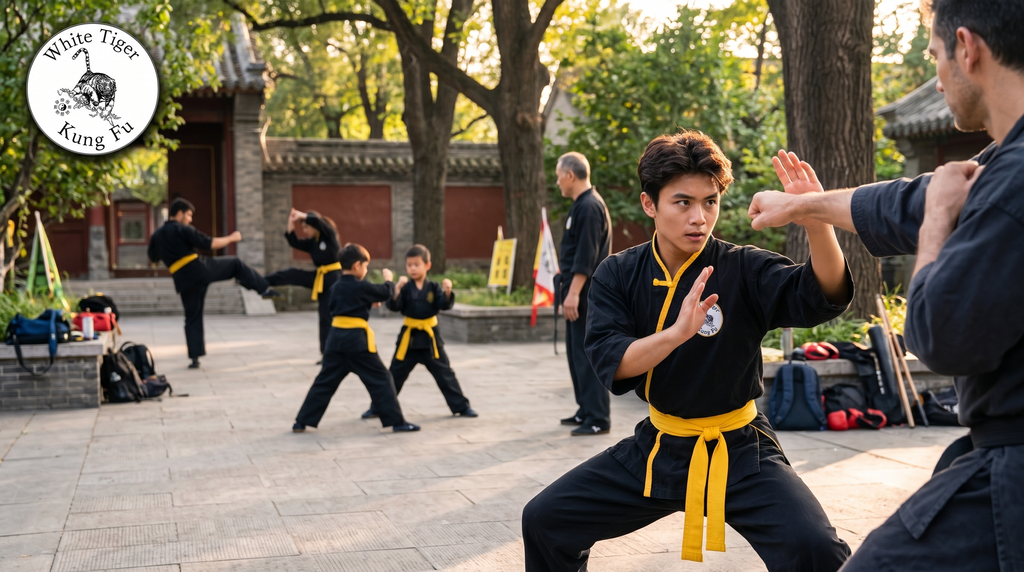
Hand-to-hand combat martial arts training introduces students to managing physical distance, protecting their balance, and responding appropriately to movement from another person.
Beginners do not need to start with complicated techniques. A strong foundation comes from learning basic movement and understanding how to remain safe during practice.
Balance and Footwork
Good footwork helps students maintain stability while moving forward, backward, or sideways. Learning to keep a comfortable stance can improve coordination and reduce the likelihood of losing balance during movement.
Instructors should teach students to move in a controlled way rather than rushing into unfamiliar positions.
Guarding and Defensive Awareness
Students may learn basic protective positioning, awareness of incoming movement, and ways to create distance from a partner. These skills should be practiced slowly before progressing to more challenging drills.
Protective equipment, clear instructions, and an instructor who monitors every exercise are particularly important for beginners.
Distance and Timing
Understanding distance means recognizing how close another person is and whether an interaction is becoming uncomfortable or unsafe.
Timing involves choosing an appropriate moment to move, defend, or disengage. In self-defense, creating an opportunity to leave can be more valuable than attempting to continue an exchange.
Controlled Partner Practice
Partner drills help students develop coordination and learn how movement changes when another person is involved. Beginners should work with cooperative partners and progress gradually under supervision.
The purpose of early training is to build sound habits, not to test how much pain someone can tolerate or encourage students to prove their strength.
Combat Martial Arts vs. Traditional Martial Arts: Key Differences
The distinction between combat martial arts and traditional martial arts is not always clear-cut. Many traditional systems contain practical defensive training, while some modern combat programs include traditional techniques and values.
Traditional martial arts often preserve established forms, etiquette, cultural practices, and structured methods of progression. Students may spend considerable time learning movement patterns, discipline, and the history of their art.
Combat-focused programs may devote more class time to partner drills, defensive responses, conditioning, and applying techniques under controlled resistance.
Neither approach is automatically better for every student. A traditional school can provide useful practical training, and a modern program can still teach respect and self-control.
When evaluating a school, ask whether its training matches your goals. If personal safety is your priority, look for instruction that covers awareness, avoiding confrontation, safe disengagement, and realistic limitations. If cultural learning, forms, coordination, and personal development are also important to you, a traditional program may be an excellent fit.
Self-Defense Combat Martial Arts: Skills for Everyday Safety
Self-defense combat martial arts should begin with recognizing danger and making decisions that reduce risk. Physical techniques are only one part of personal safety.
Situational Awareness
Pay attention to your surroundings, notice changes in behavior, and recognize situations that make you uncomfortable. Awareness does not mean treating everyone as a threat, it means being prepared to respond sensibly when circumstances change.
Verbal De-escalation
Calm communication may help prevent an argument from becoming physical. Short, clear statements and a willingness to leave an unproductive interaction can reduce unnecessary conflict.
Avoid insulting, threatening, or deliberately provoking another person.
Creating Space and Leaving Safely
If a situation becomes threatening, moving toward a public area, an exit, or other people may provide a safer option than staying to argue.
Physical training can help students become more comfortable with movement and balance, but the safest response depends on the circumstances.
Understanding Personal Boundaries
Students should learn that they have the right to refuse unwanted contact and seek help when they feel unsafe.
If there is an immediate threat, prioritize escaping and contacting appropriate emergency services. Self-defense training should never be presented as a guarantee against injury.
Combat Fitness Martial Arts: Improve Strength, Speed, and Endurance
Combat fitness martial arts combines martial arts movements with physical conditioning. Depending on the program, a session may include footwork drills, movement sequences, pad work, bodyweight exercises, mobility work, and cardiovascular training.
Regular participation can help improve several aspects of physical fitness.
Strength and stability: Stances, controlled movements, and conditioning exercises can challenge the muscles used to maintain balance and support movement.
Cardiovascular endurance: Repeated drills and active practice can raise the heart rate and help develop stamina when performed at an appropriate intensity.
Coordination and agility: Practicing different movement patterns encourages students to coordinate their hands, feet, eyes, and body position.
Mobility and flexibility: Warm-ups, stretching, and controlled movement can help students work on their range of motion.
Mental discipline: Following instructions and maintaining consistent practice can encourage patience and persistence.
The results depend on training frequency, intensity, recovery, and individual health. Beginners should increase their workload gradually and tell their instructor about any physical limitations.
When comparing combat fitness martial arts programs, look for qualified supervision, suitable warm-ups, modifications for different abilities, and a balanced approach to recovery.
Martial Arts Hand-to-Hand Combat Techniques Everyone Should Understand
Learning martial arts hand-to-hand combat techniques starts with understanding the principles behind movement rather than memorizing a long list of moves.
Positioning and Balance
A stable position makes it easier to move deliberately and maintain control of the body. Students should practice basic stances and transitions before attempting more demanding partner exercises.
Defensive Movement
Defensive movement includes maintaining awareness, moving away from danger, protecting personal space, and finding a safe route out of an uncomfortable situation.
The objective in self-defense is not to keep exchanging techniques. It is to reduce danger and disengage when possible.
Escaping and Disengaging
Some martial arts teach controlled methods for recovering balance, escaping a hold, or returning to a safer position. These skills should be introduced by a qualified instructor and practiced with clear safety rules.
No technique works reliably in every situation, particularly when there are multiple people, hard surfaces, or unexpected hazards.
Practicing With Appropriate Resistance
As students gain experience, an instructor may introduce carefully controlled drills that require them to respond to a partner’s movement. This can help them understand the difference between performing a technique alone and using it while another person is moving.
Training intensity should match the student’s experience, and all participants should be able to stop an exercise immediately if something feels unsafe.
Combat Karate Near Me: How to Choose the Right Training School
Searching for combat karate near me can help you discover nearby schools, but choosing the right program requires more than checking distance or reading a few reviews.
Start by identifying what you want from training. You might be interested in practical self-defense, traditional Karate, competition, physical conditioning, or a combination of these goals.
Look for schools that explain their curriculum clearly and provide opportunities to observe a class or attend a beginner session.
Ask the instructor how beginners progress, whether partner exercises are supervised, what safety equipment is required, and how students learn to avoid unnecessary confrontation.
It is also worth checking instructor qualifications, cleanliness, class size, transparent fees, and the way staff interact with students.
If you are comparing options for combat karate near me, do not assume that a school using the word combat necessarily offers better real-world self-defense training. Ask for specific examples of what students practice and how their progress is evaluated.
A good school should welcome reasonable questions and avoid promises that students will become unbeatable or completely safe from harm.
Cross Combat Martial Arts: Combining Different Fighting Styles
Cross combat martial arts generally refers to combining training methods from more than one martial art. The specific meaning can vary between schools and programs, so it is important to ask what a provider means by the term.
A mixed program might combine Boxing for striking fundamentals, Judo for throws and balance, and Brazilian Jiu-Jitsu for grappling and positional escapes. Another program might blend traditional Kung Fu movement with modern conditioning and supervised partner drills.
Combining styles can expose students to different movement principles and help them understand where their experience is limited.
However, learning several styles at once can also become confusing for beginners if the program lacks a clear structure. Students need enough time to develop sound fundamentals before adding more techniques.
If you are considering cross combat martial arts, ask how instructors organize the curriculum, how they manage safety across different training methods, and whether students receive enough practice in each area.
The goal should be well-rounded learning rather than collecting techniques without understanding when they are appropriate.
Combat Club Martial Arts and Fitness: What to Look for in a Training Program
A combat club martial arts and fitness program may combine martial arts instruction with strength development, cardiovascular conditioning, mobility, and group training.
The quality of the program depends on how well these elements are organized.
Qualified Instructors
Look for instructors who can explain techniques clearly, adapt lessons for beginners, and maintain a safe training environment. They should welcome questions and provide constructive feedback.
Structured Beginner Classes
New students should not be expected to keep up with advanced practitioners immediately. A good program introduces fundamental movements first and increases difficulty gradually.
Clear Safety Standards
Classes should have appropriate rules for partner drills, protective equipment, contact intensity, and stopping exercises. Students should never be pressured to continue when injured or uncomfortable.
A Balanced Fitness Approach
A useful program combines technical practice with conditioning that matches the students’ abilities. Rest, hydration, recovery, and gradual progression are important parts of training.
A Respectful Community
Observe how students and instructors treat one another. A positive club encourages cooperation, responsibility, and consistent improvement rather than humiliation or unnecessary aggression.
When researching combat club martial arts and fitness options, consider whether the program supports your long-term goals and whether you feel comfortable learning there.
How to Choose the Best Combat Martial Arts for Your Goals
The right martial art is the one that matches your needs, suits your abilities, and offers high-quality instruction.
If your priority is striking fundamentals, Boxing, Muay Thai, and some Karate or Kung Fu programs may be worth exploring. If you want to learn about throws and grappling, consider Judo or Brazilian Jiu-Jitsu.
For a broader introduction, look for a program that combines different training methods in a structured way without rushing beginners through advanced material.
Before enrolling, consider these questions:
- Does the school teach the skills I want to learn?
- Are instructors experienced and attentive to safety?
- Can beginners progress at a comfortable pace?
- Are the fees, schedule, and training expectations clear?
- Does the class encourage respect and responsible behavior?
- Can I observe a session or try an introductory class?
If you are looking for combat martial arts training, focus on the quality of the teaching rather than choosing a style solely because it sounds more intense.
The same principle applies to hand-to-hand combat martial arts: a clear curriculum, supervised practice, and realistic expectations are more useful than dramatic marketing claims.
Benefits of Close Combat Martial Arts for Confidence and Fitness
Regular martial arts training can provide benefits that extend beyond learning techniques.
Greater Physical Awareness
Students practice balance, coordination, and controlled movement. Over time, they may become more aware of how their bodies move and respond to different physical demands.
Improved Fitness
Many classes involve continuous movement, repeated drills, and conditioning exercises. Depending on the program, these activities can contribute to strength, stamina, and general physical fitness.
Confidence Through Practice
Learning a difficult movement or reaching a personal goal can help students recognize their own progress. Confidence develops through consistent effort rather than the belief that a person can defeat anyone.
Patience and Discipline
Students often need to repeat techniques, listen to corrections, and practice regularly. These routines can help them develop persistence and a more structured approach to learning.
Better Awareness of Personal Safety
Training can introduce students to distance, boundaries, de-escalation, and the importance of leaving dangerous situations. These skills should complement, not replace, sound judgment and seeking help when necessary.
Results vary by person, instructor, and training environment. The best program is one that encourages steady progress while prioritizing health and safety.
Is Close Combat Martial Arts Suitable for Beginners?
Yes. Many martial arts schools offer beginner-friendly programs for adults and children, although the appropriate class depends on age, experience, fitness, and personal goals.
Beginners should start with basic movement, balance, coordination, and defensive awareness. More demanding drills should be introduced only after students understand the fundamentals and relevant safety procedures.
You do not need to be exceptionally strong or athletic to begin. A good instructor can modify exercises to suit different starting abilities.
People returning to exercise after a long break should build their workload gradually. Anyone with a medical concern or physical limitation may wish to seek professional advice before beginning strenuous training.
For children, choose an age-appropriate class with clear supervision, respectful teaching, and an emphasis on safe practice.
The important thing is to find a school where you can learn consistently, ask questions, and improve without feeling pressured to take unnecessary risks.
Conclusion: Finding the Best Close Combat Martial Arts for Your Needs
Choosing a martial art involves understanding your goals, comparing different training methods, and finding an instructor who prioritizes both learning and safety.
Close combat martial arts can help students develop movement, coordination, fitness, and an understanding of physical distance. Depending on the program, students may also learn striking fundamentals, grappling, defensive positioning, and ways to disengage from unsafe situations.
Whether you are exploring combat martial arts, comparing hand-to-hand combat martial arts, or considering cross combat martial arts, focus on the quality of instruction, the suitability of the curriculum, and the opportunity to progress gradually.
Ultimately, the best choice is a program that helps you become more capable, physically active, and aware of personal safety while encouraging discipline, respect, and responsible decision-making.
Frequently Asked Questions About Close Combat Martial Arts
Which martial art is best for close combat?
There is no single best martial art for every situation. Boxing and Muay Thai emphasize striking, Judo focuses on throws and balance, Brazilian Jiu-Jitsu emphasizes grappling, and Kung Fu and Karate offer different traditional approaches. The quality of instruction and the student’s goals matter considerably.
What is the difference between hand-to-hand combat and self-defense?
Hand-to-hand combat generally describes physical engagement between people at close range. Self-defense is broader and includes recognizing danger, avoiding confrontation, setting boundaries, de-escalating conflict, escaping, and seeking help. Effective personal safety does not always require physical techniques.
Can beginners learn combat martial arts safely?
Yes, when training is properly supervised and progresses gradually. Beginners should learn fundamentals first, follow safety rules, use appropriate equipment, and avoid unsupervised attempts at advanced techniques.
How does combat fitness martial arts improve physical conditioning?
Depending on the program, martial arts training can involve cardiovascular exercise, strength challenges, coordination drills, and mobility work. Regular participation may improve fitness, but results depend on training intensity, consistency, recovery, and individual circumstances.
Is Kung Fu effective for self-defense?
Kung Fu includes many different styles and teaching methods. Some programs include practical partner drills and defensive applications, while others emphasize forms and traditional practice. Ask about the school’s curriculum and safety approach before deciding whether it meets your needs.
How often should beginners train?
The appropriate frequency depends on fitness, schedule, recovery, and the intensity of classes. Starting with a manageable routine and increasing gradually is generally more sustainable than training too hard at the beginning.
What should I look for when searching for combat karate near me?
Look for qualified instructors, a clear beginner curriculum, suitable safety procedures, transparent fees, and a respectful learning environment. Observe a class if possible and ask how the school teaches practical skills and conflict avoidance.
What does cross combat martial arts mean?
The term commonly describes combining elements from different martial arts, such as striking and grappling. However, terminology varies between providers, so ask the school to explain its specific curriculum and training methods.